CNC Machining Quote Factors: Corner Radii, Tolerances and Cost
Why is the quote for my part so high?
Factory quotes are based on machining time plus raw material costs (variable costs). If equipment depreciation is added, the quote increases. As a customer, you naturally want the lowest cost. If a product is still in R&D, modifying the design to lower machining costs without affecting application can reduce the price.
We offer some concrete directions for reference:
1. Avoid unnecessary right angles
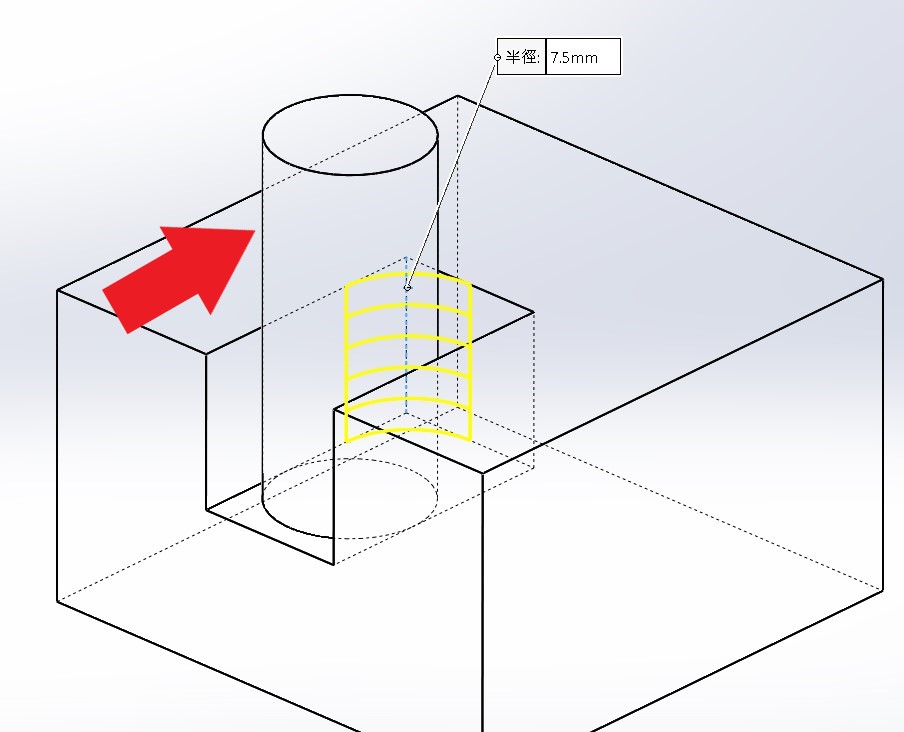
Some right angles (90 degrees) are impossible for CNC milling cutters to produce directly and require corner cleaning or radius relief. Larger radii allow for faster machining. If a sharp right angle is absolute necessary, other methods (like EDM) can be used, but the price will increase.
As shown below, a cylindrical milling cutter creating a deep pocket will naturally leave a radius and cannot create a sealed sharp corner.
2. Attention to Tolerance Marking
Part precision relies on tolerance marking. Important areas like mating surfaces, Flatness 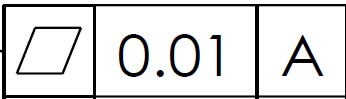 , or Parallelism
  require specific processing methods. Marking tolerances is necessary, but marking tight tolerances on non-critical parts drives up costs unnecessarily.
3. Standard Machining Sizes
Most drilling has standard sizes. If a special size like ø2.53mm is used (where decimals aren't multiples of 5), tool costs and quotes will be higher.
4. High Volume
Initial production costs are highest. High volume spreads production costs and lowers raw material costs through economies of scale, resulting in lower quotes.
5. Select Suitable Materials
There are many metal types. For stainless steel, there are 300 series (SUS3xx) and 400 series (SUS4xx). If grinding is required and there are no special conditions, we recommend the 400 series. It is magnetic, making it easier to hold on a magnetic chuck grinder without extra fixtures, lowering manufacturing costs and providing a better price.